LinkedIn Engagement Metrics: Industry Benchmarks Explained
Industry-specific LinkedIn benchmarks and post-format analysis showing which content, like multi-image posts and carousels, drives the most meaningful engagement.

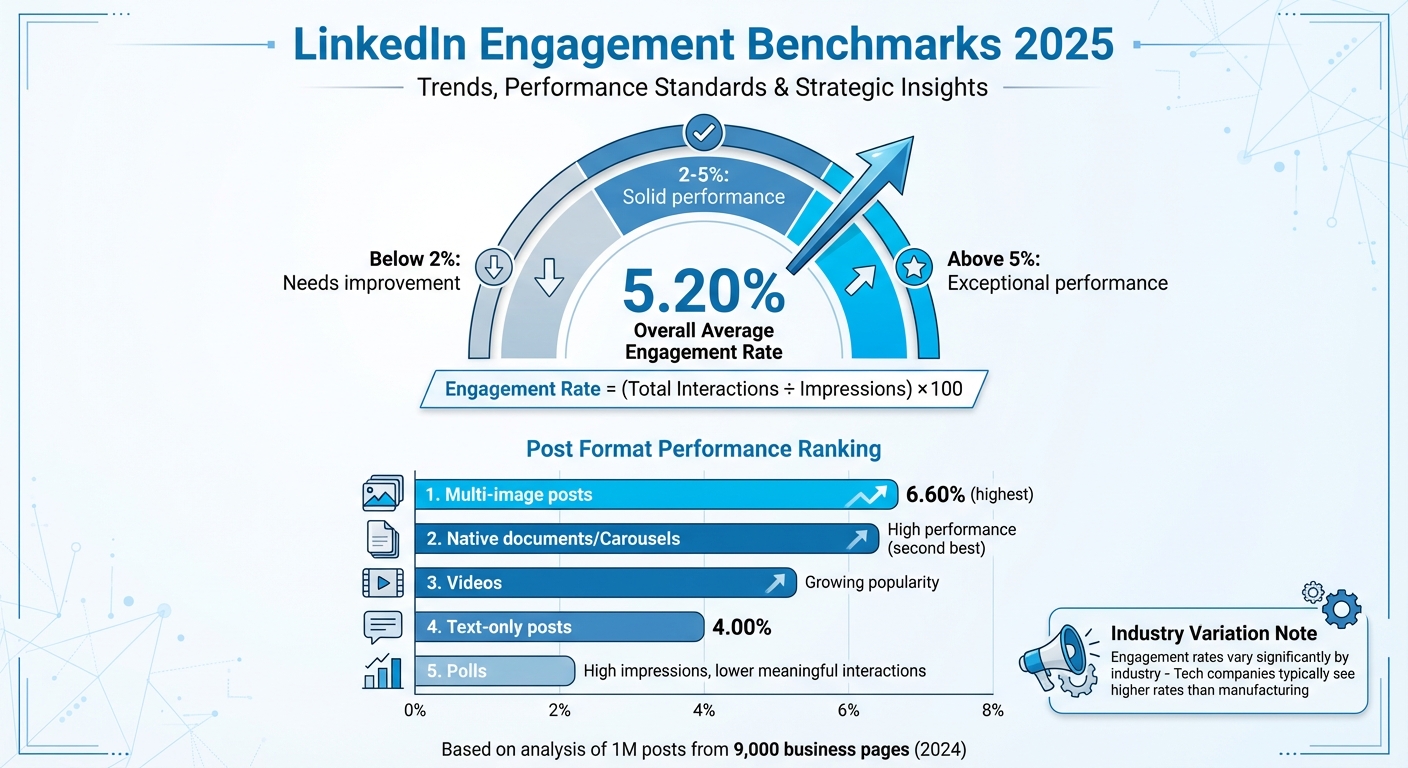
LinkedIn engagement metrics help measure how users interact with your content - likes, comments, shares, clicks, and video views. Tracking these metrics is crucial for refining your content strategy and understanding your performance compared to industry standards. For example, in 2025, LinkedIn's average engagement rate reached 5.20%, with anything above 2% considered solid and over 5% exceptional.
Key insights:
- Multi-image posts and carousel-style documents perform best for engagement.
- Polls generate high impressions but fewer meaningful interactions.
- Tools like EngageKit and Hootsuite Analytics can help track and improve engagement.
EngageKit stands out by letting you manually approve interactions, ensuring they align with your goals, though it requires more time compared to automated tools. Combining industry benchmarks with targeted tools can help you focus on meaningful metrics and build stronger LinkedIn connections.
LinkedIn Engagement Rate Benchmarks and Post Format Performance 2025
1. Key Engagement Metrics Across Industries
Engagement Rate Benchmarks
By mid-2025, LinkedIn's overall engagement rate hit 5.20% [1]. Generally, an engagement rate above 2% is considered solid, while anything over 5% is exceptional. To calculate your engagement rate, divide total interactions - such as likes, comments, shares, and clicks - by impressions, then multiply by 100. Without comparing your numbers to these benchmarks, it’s easy to misinterpret your performance.
For instance, tech companies often report higher engagement rates compared to manufacturing firms, as engagement levels can differ drastically across industries.
Post Format Performance
When it comes to LinkedIn content, multi-image posts lead the pack, delivering the highest engagement rates and total likes across businesses of all sizes [1]. Close behind are native documents (carousel-style posts), which also perform well [1][3]. Videos have grown in popularity, especially when they’re crafted to feel strategic and authentic [1]. On the other hand, polls excel at generating impressions and expanding reach, though they’re less effective for sparking deeper conversations.
Tools for Tracking and Improving Engagement
Keeping a close eye on your metrics is essential. A study by Socialinsider analyzed 1 million LinkedIn posts from 9,000 business pages between January and December 2024 to establish the 2025 benchmarks [1]. If you're looking to compare your performance with others, Databox Benchmark Groups offer free access to anonymized data from thousands of companies [4]. For a more comprehensive view, Hootsuite Analytics provides a 30-day free trial, aggregating stats across LinkedIn and other platforms [5]. Even something as simple as tracking your metrics in a spreadsheet can help you stay on top of your engagement [3].
These metrics and tools are a great starting point for exploring solutions like EngageKit to foster more meaningful LinkedIn interactions.
Which LinkedIn Analytics Measure Post Engagement?
2. EngageKit
EngageKit takes LinkedIn engagement to the next level by offering practical tools designed to boost your visibility and connections.
Tools for Tracking and Improving Engagement
With EngageKit’s human-in-the-loop approach, you’re in control of every interaction. This means you can approve engagements, ensuring each one aligns with your professional image. Instead of just monitoring your connections, EngageKit provides targeted lists and topic searches, helping you zero in on conversations that matter most to your niche. This focus allows you to engage in discussions that directly influence your standing in the industry.
Consistent and meaningful interactions through EngageKit can lead to better response rates for your outbound messages. When you maintain regular engagement, your connections are more likely to recognize you and respond when you reach out.
EngageKit also enhances personal branding by driving traffic to your content. By setting up searches around topics tied to your expertise, you stay involved in key discussions, keeping your name top of mind in your field. This consistent engagement not only boosts visibility but also helps establish you as a thought leader. These tools work hand-in-hand with industry benchmarks, turning insights into meaningful interactions that strengthen professional relationships.
Up next, we’ll dive into EngageKit’s strengths and potential challenges to help you decide if it aligns with your LinkedIn goals.
Pros and Cons
Taking a closer look at engagement trends and the capabilities of tools like EngageKit, it's essential to weigh the strengths and weaknesses of industry-specific metrics and LinkedIn engagement tools. Each approach brings unique benefits and challenges, depending on your goals and the sector you operate in.
Industry-specific benchmarks are particularly useful because they offer a clear frame of reference for performance. For example, what qualifies as strong engagement in the technology sector might not align with expectations in healthcare or manufacturing. These benchmarks help you set realistic, tailored goals and avoid misinterpreting your performance metrics [3].
That said, there are some challenges with this method. While these benchmarks provide valuable insights, niche industries often face data limitations. In such cases, third-party analytics tools may be necessary to supplement LinkedIn's native analytics, especially when tracking competitor performance [4][6]. On the other hand, EngageKit takes a more hands-on approach with its human-in-the-loop model. Every engagement requires manual approval, ensuring that interactions align with your professional brand. However, this added layer of control can be time-intensive compared to fully automated options.
| Approach | Benefits | Key Drawbacks |
|---|---|---|
| Industry-Specific Benchmarks | Provides relevant context, supports realistic goal setting, and enables data-driven decisions | Limited data in niche industries; may require third-party tools for deeper insights |
| EngageKit | Ensures full control over interactions, fosters authentic connections, and boosts response rates | Manual approval process; takes more time than automated solutions |
Conclusion
Using industry-specific benchmarks helps transform raw data into actionable insights that align with your business goals. Context plays a key role here - without it, you can't accurately determine whether your engagement rate reflects success or signals the need for improvement [5]. For instance, a technology company might celebrate metrics that would be considered underwhelming in industries like healthcare or manufacturing [3].
It's also essential to prioritize metrics that drive revenue over vanity numbers. For example, knowing that multi-image posts achieve a 6.60% engagement rate compared to 4.00% for text-only posts [1] allows you to focus your content creation efforts where they’ll have the most impact. Similarly, understanding that LinkedIn ads can deliver conversion rates up to twice as high as other platforms justifies your ad spend and channel strategy [2]. This kind of data-driven approach lays the groundwork for tools designed to maintain authenticity.
EngageKit addresses this challenge by ensuring that every engagement aligns with your brand and feels genuine. Thanks to its human-in-the-loop model, every interaction preserves your professional image. This increases the chances that your direct messages will receive meaningful responses - after all, people remember authentic, thoughtful exchanges, not generic automated messages.
The best LinkedIn strategies strike a balance between tracking quantitative metrics and fostering meaningful, qualitative engagement. By combining industry benchmarks with authentic interactions, you can turn connections into valuable business relationships, making LinkedIn a powerful tool for business development.
FAQs
What are the best ways to boost my LinkedIn engagement using industry benchmarks?
To increase your LinkedIn engagement, focus on using content formats that naturally attract interaction. Formats like multi-image posts, native documents, videos, and polls often encourage more meaningful interactions and higher engagement rates.
Consistency is key. Aim to post regularly and at times when your audience is most active - such as Tuesdays and Thursdays at 8:00 AM or 12:00 PM. This timing can help boost your content's visibility. Also, tailor your posts to reflect your industry's engagement trends, but aim to go beyond those averages. The goal is to create relevant, high-quality content that inspires people to like, comment, share, or save your posts.
By focusing on these strategies and aligning with what works best on LinkedIn, you can grow your presence and build genuine connections with your audience.
How can multi-image posts improve engagement on LinkedIn?
Multi-image posts on LinkedIn are a smart tool for increasing engagement. In fact, research shows they can boost interaction rates by 6.6%, making them one of the most effective content formats on the platform. By blending visuals with storytelling, these posts can spotlight products, share valuable insights, or narrate stories that spark meaningful conversations.
This format adds a dynamic and eye-catching element to your content, helping it grab attention in LinkedIn's crowded feed. Whether you're a professional showcasing your expertise or a brand aiming to connect with your audience, multi-image posts offer a creative way to make your message stand out.
How can EngageKit improve my LinkedIn engagement and connections?
EngageKit is crafted to help you take charge of your LinkedIn interactions, putting you in the driver’s seat of building genuine connections. You get to approve every engagement, ensuring your activity aligns perfectly with your personal or professional objectives.
With features like targeted lists and niche-specific topic searches, EngageKit simplifies connecting with the right people. This thoughtful approach helps you grow relationships that matter. Over time, it doesn’t just enhance your visibility - it also improves the chances of getting responses to your direct messages, making your LinkedIn experience more rewarding.