Ultimate Guide to LinkedIn Visibility in 2025
Practical tactics to improve LinkedIn visibility in 2025: optimize your profile, use native short videos, leave thoughtful comments, and follow a 90-day plan.

LinkedIn in 2025 is all about quality engagement and strategic content. With over 1 billion users, it’s the go-to platform for professional networking and B2B leads, but changes to the algorithm mean success requires more effort. Organic reach has dropped by 65%, but engagement per post is up 12%. This means consistent, meaningful activity is more important than ever.
Here’s what matters most:
- Algorithm Priorities: Posts with high dwell time, thoughtful comments, and relevance to your network perform better.
- Content That Works: Native videos, carousels, and text posts outperform external links. Short, engaging videos (30-90 seconds) generate 5x more engagement.
- Profile Optimization: A polished headline, professional photo, and updated skills can boost profile views by 30% and search appearances by 2x.
- Engagement Strategy: Thoughtful comments and timely responses (within 1 hour) increase visibility by 35%.
To succeed:
- Optimize Your Profile: Use industry keywords, a professional headshot, and a custom banner.
- Post Consistently: Aim for 3-5 posts weekly, focusing on actionable insights and data-backed content.
- Engage Authentically: Comment meaningfully on others’ posts and respond to comments on your own.
LinkedIn is no longer about posting for the sake of it. It’s about creating value, sparking conversations, and building a network that aligns with your goals. Use these strategies to stand out and grow your presence effectively.
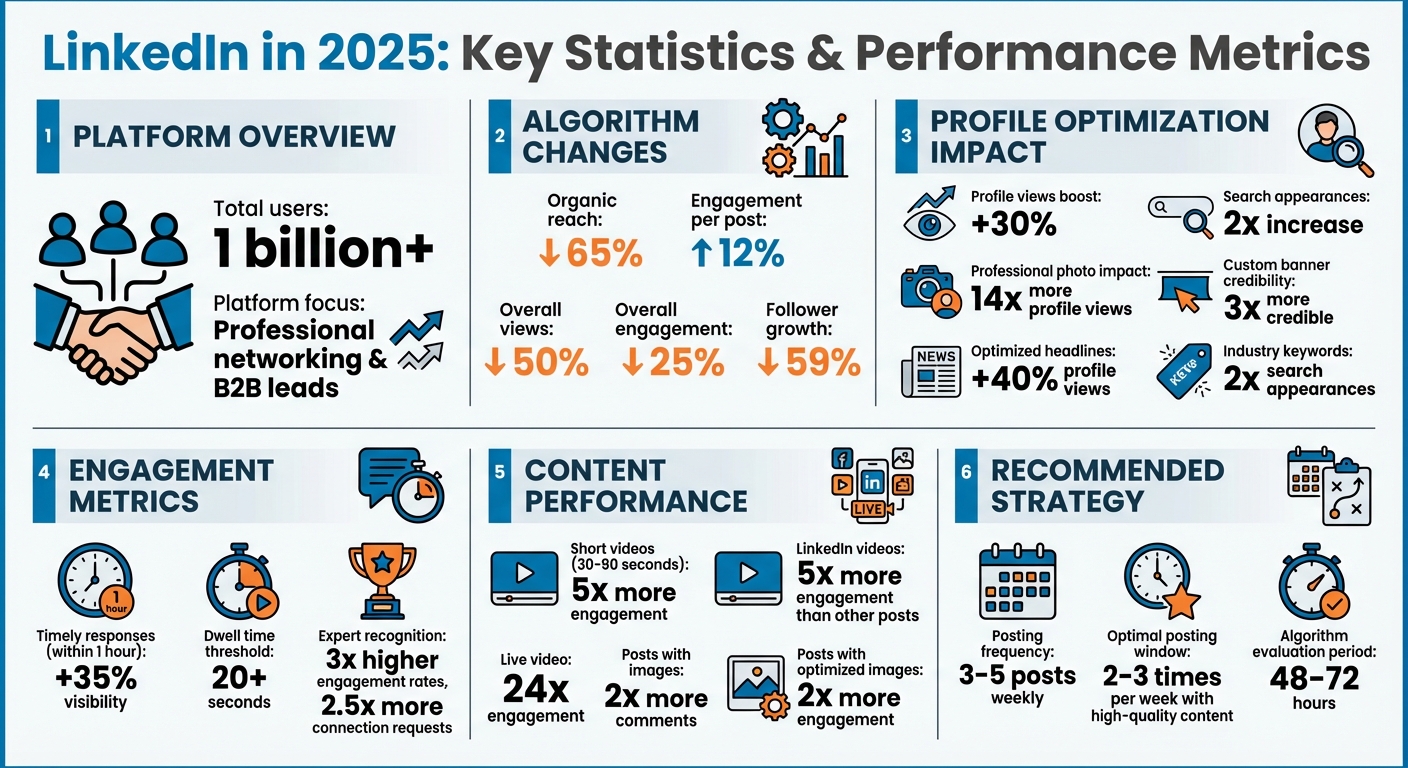
LinkedIn Algorithm Changes and Performance Statistics 2025
How to beat the LinkedIn algorithm in 2025
How the LinkedIn Algorithm Works in 2025
If you're looking to make an impact on LinkedIn in 2025, it's crucial to understand how the platform's algorithm has evolved. LinkedIn has shifted its focus significantly, prioritizing genuine professional conversations and meaningful engagement over shallow interactions. Tactics like engagement pods and generic comments - think "Great post!" - are no longer effective. In fact, the algorithm now actively deprioritizes these superficial strategies [5].
This change has caused a noticeable shift across the platform. Views on LinkedIn have dropped by 50%, engagement is down by 25%, and follower growth has shrunk by 59% [4]. Instead of favoring recent posts, LinkedIn now emphasizes relevance, allowing high-quality content to gain traction even days or weeks after it's published [3].
Let’s break down the key signals that influence your visibility on the platform.
What Signals Affect Your Visibility
The LinkedIn algorithm relies on several factors to determine which posts get seen. One of the most critical is dwell time - how long someone spends engaging with your content. Posts that hold a user’s attention for at least 20 seconds tend to outperform those that are quickly scrolled past [8,12].
Another key factor is the golden hour, the first hour after your post goes live. During this window, initial engagement plays a big role in determining whether your content reaches second- and third-degree connections [3]. But it’s not just about quantity. A post with a dozen thoughtful comments sparking genuine discussion will outperform one with 50 generic reactions [5].
The algorithm also looks beyond simple likes and comments, tracking actions like profile visits, website clicks, and new follows after someone views your post [5]. Additionally, LinkedIn evaluates network relevance, meaning engagement from professionals in related industries or roles carries more weight.
Timely interaction matters, too. Responding to comments within an hour can boost your post’s visibility by 35% [4].
These signals all work together to reward content that demonstrates expertise and keeps users engaged.
Expert Recognition and Dwell Time Explained
LinkedIn actively promotes users who establish themselves as experts in specific fields. By consistently sharing original insights - whether on supply chain management, cybersecurity, or HR technology - you can position yourself as a thought leader. This recognition comes with measurable perks: professionals who regularly share unique perspectives see three times higher engagement rates, 2.5 times more connection requests, and greater visibility in search results [6].
The platform also identifies and rewards scroll-stopping content, which grabs attention and encourages users to pause mid-scroll.
"For those looking to improve their LinkedIn performance, my top advice would be to find your unique voice and perspective. Share authentic stories and experiences that resonate with your audience, rather than simply repeating generic advice."
Certain content formats naturally encourage longer dwell time. Native videos, carousel posts, interactive PDFs, and well-structured articles are particularly effective at keeping users engaged [8,13,14].
Which Content Formats Get the Most Reach
Native content consistently outperforms posts with outbound links. Text posts, carousels, and videos directly uploaded to LinkedIn perform better because they keep users on the platform, which the algorithm favors [3]. If you need to share an external link, placing it in the comments rather than the main post can help maintain your reach [3].
Video content is especially powerful. LinkedIn videos generate five times more engagement than other types of posts, while Live video achieves 24 times the engagement [3]. For best results, keep vertical videos between 30 and 90 seconds long, and ensure they are polished and professional [6]. Posts with images also tend to spark twice as many comments as text-only updates [3].
To succeed in 2025, you’ll need a balanced content strategy. Combining short, engaging media posts with longer, insightful articles allows you to maximize both reach and credibility [7]. The algorithm evaluates posts over a 48–72 hour period, focusing on retention signals before expanding their reach. Posting 2–3 times per week with high-quality insights consistently performs better than churning out daily, low-effort updates [5].
How to Optimize Your LinkedIn Profile
Your LinkedIn profile acts as your digital storefront, shaping the first impression others have of you. Profiles that are thoughtfully crafted receive 30% more weekly views [15], and those with professional photos see 14 times more profile views [9][19]. The difference between getting noticed or overlooked often comes down to optimizing three key areas: your headline and summary, your visuals, and keeping everything up to date. These steps also align your profile with LinkedIn's algorithm, helping you get discovered.
Writing a Headline and Summary That Stands Out
Your headline is prime real estate on your profile. With 220 characters available, it’s your chance to go beyond just listing your job title and showcase the unique value you offer. Optimized headlines can boost profile views by 40%, and incorporating three to five industry-relevant keywords in your headline and About section can double your search appearances [11].
Think of your headline as your elevator pitch. Instead of a generic title like "Marketing Manager", try something more specific, such as: "Digital Marketing Strategist | Driving B2B Growth Through Data-Driven Campaigns" [10][13]. The formula is simple: what you do + how you do it + the results you deliver.
Your About section offers 2,600 characters to tell your professional story. Use this space to weave in industry-specific keywords that highlight your expertise [14][15]. Keep it easy to read with short paragraphs and bullet points. Avoid forcing keywords unnaturally - both LinkedIn's algorithm and human readers can spot keyword stuffing [11][13][15].
In the Experience section, focus on achievements and measurable results rather than listing job responsibilities. Use action verbs like "developed", "implemented", or "boosted" to create a compelling narrative [10][15]. With 243 million U.S. LinkedIn users, recruiters rely on filters and keywords to refine their searches [15]. An optimized profile ensures you won't get overlooked.
Enhancing Your Profile's Visual Appeal
Visual elements play a big role in making your profile stand out. Profiles with custom banners are seen as three times more credible by recruiters [17], and posts with optimized images generate up to two times more engagement [17]. Even your profile photo can have a huge impact - profiles with photos receive 50-70% more inquiries [18].
Start with a professional headshot. Use a recent photo where your face takes up about 60% of the frame, cropped from your shoulders to just above your head [18][19]. Avoid selfies; have someone else take the picture. A genuine smile, especially one that shows teeth, makes you appear more likable and competent. Research involving 800 profile pictures found that toothy smiles were rated twice as likable as closed-mouth ones [19]. Stick to a clean background and natural lighting [18][19].
Your custom banner (1584 x 396 pixels) is another opportunity to showcase your professionalism [16][17][18]. Keep important text within the 1200 x 300 pixel "safe zone" to avoid cropping on mobile devices [17]. Use colors that align with your personal or company brand, include your logo if applicable, and add subtle visuals that reflect your expertise or certifications [16][18]. A tagline or role in clear, readable text can enhance the design - but keep it uncluttered for maximum impact [16][18].
Keeping Your Profile Fresh and Relevant
A static profile can make you seem disengaged. Regular updates to your skills, certifications, and experience show that you’re staying current with industry trends, which LinkedIn’s algorithm rewards.
Update your profile photo periodically to keep it up to date. Adjust your keywords every few months, especially if your career goals or industry trends evolve [15]. Add new certifications as you earn them, and refresh your Experience section with recent accomplishments and projects. LinkedIn’s Skills section provides suggestions based on platform data - use these to identify relevant terms you might have missed [15].
Think of your LinkedIn profile as a living document. Professionals who regularly refine their profiles - by tweaking keywords, updating visuals, and showcasing new achievements - are the ones who get noticed faster, build trust more easily, and land opportunities sooner [8].
Content and Engagement Methods That Work
Building visibility on LinkedIn in 2025 isn’t about quick fixes or surface-level interactions - it’s about showing up consistently and engaging authentically [2]. To get the most out of the platform, you need a mix of thoughtful content creation and strategic engagement.
Creating Content That Drives Engagement
Posting regularly - about 3 to 5 times a week during peak hours - can make a big difference [20]. Mix up your formats to keep things fresh. Use text posts, images, videos, polls, articles, and even documents to engage different types of users [20].
What works best? Content that offers actionable insights and clear tips. Share lessons from your personal experiences or highlight industry trends backed by solid data. Posts that deliver real takeaways are more likely to be saved and shared, which signals LinkedIn’s algorithm to boost your content’s reach [3]. Over time, aim to build a content library that consistently provides value to your audience.
But creating great content is just one piece of the puzzle. To truly amplify your reach, you need to dive into the comments section.
Using Comments to Boost Your Visibility
In 2025, comments are the secret weapon for LinkedIn visibility [2]. Thoughtful comments let you tap into existing conversations while leveraging the audience and momentum of the original post [21]. When you leave a meaningful comment on a post within your niche, you’re not just engaging with the author - you’re also introducing yourself to their network [22].
Quality matters more than quantity here. A single well-thought-out comment can do more for your personal brand than dozens of generic replies. It’s about signaling value and sparking deeper conversations, all while naturally growing your reach [2][22].
If you’re wondering how to scale this kind of engagement without losing authenticity, there’s a tool that can help.
Managing Engagement with EngageKit
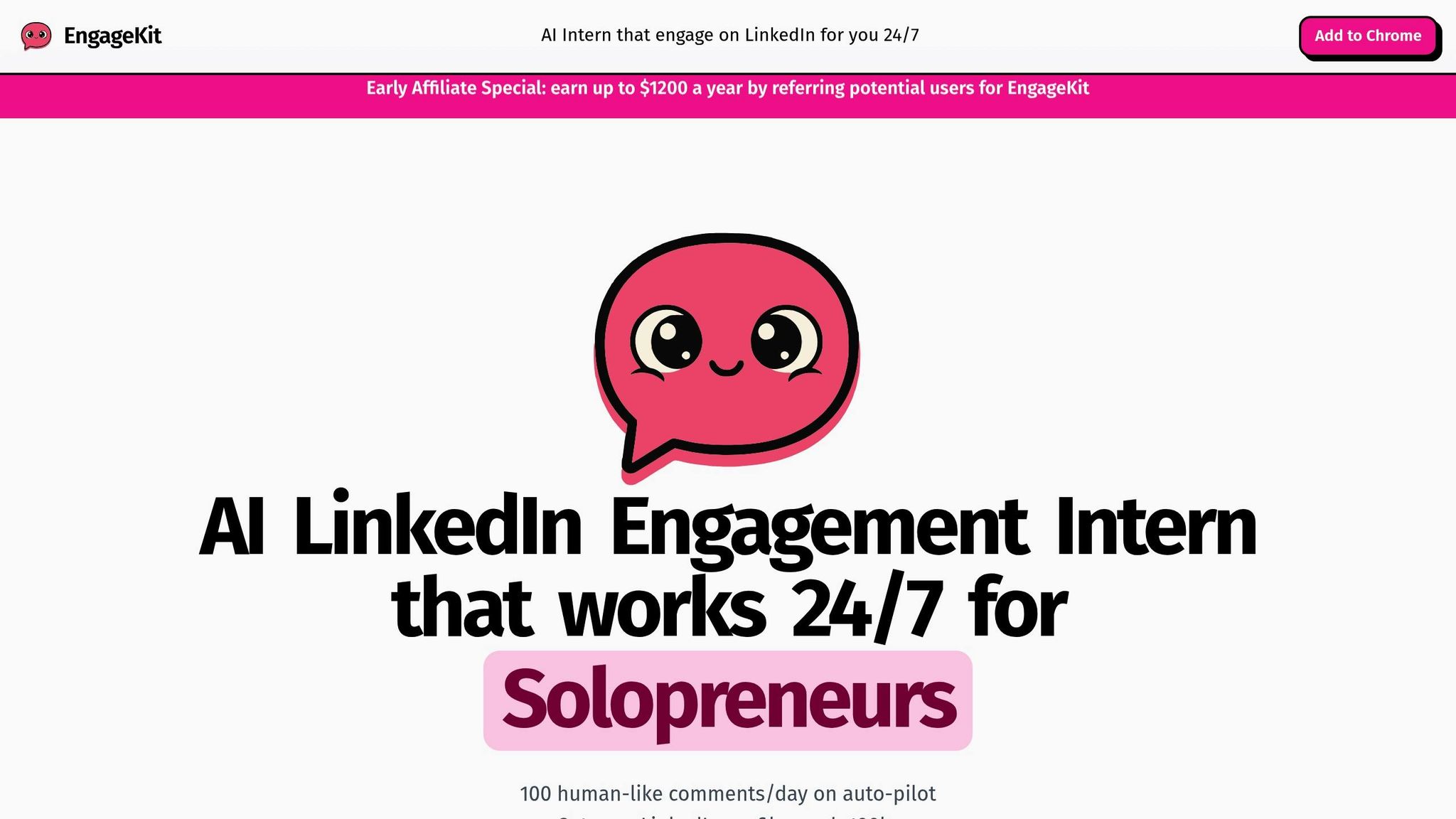
EngageKit simplifies the process of staying active and genuine on LinkedIn. It lets you approve every interaction before it’s posted, ensuring your comments always sound like you. The tool also helps you track engagement by creating targeted lists and searching for topics that align with your niche. This way, you can focus on content that truly resonates with your audience.
90-Day Plan for Building LinkedIn Visibility
Building a strong presence on LinkedIn takes a step-by-step approach. This 90-day plan is designed to guide you through the process, helping you optimize your profile, establish a regular content routine, and grow a meaningful network. Each phase builds on the last, ensuring steady progress toward a stronger LinkedIn presence.
Days 1-30: Optimize Your Profile
Start by crafting a profile that stands out. Update it with industry-relevant keywords, a professional headshot, and a custom background image. Refresh your work experience, skills, and featured sections, using specific examples that highlight your expertise.
This is especially important in 2025, as LinkedIn has become the go-to platform for recruiters - over 80% now check LinkedIn first when evaluating candidates [23]. Make sure your headline clearly communicates what you do and who you help, rather than just listing your job title. Your summary should tell your story in a way that's easy to skim on mobile devices, as 72% of LinkedIn activity happens on mobile [4]. Once your profile is polished, you'll be ready to focus on creating and sharing content.
Days 31-60: Establish a Posting Routine
With your profile in great shape, shift your focus to posting consistently. Aim for 3–5 posts per week, and pay attention to analytics to see what resonates with your audience. The goal here isn't perfection - it’s about showing up regularly and learning what works.
In 2025, LinkedIn rolled out new metrics - Profile Views from Post, Followers Gained from Post, and Premium Button Clicks - that provide deeper insights into your content's impact [25]. Use this data to fine-tune your approach, identifying the topics and formats that perform best in your niche. Consistency in posting not only builds your audience but also signals to LinkedIn's algorithm that your content deserves more visibility.
Days 61-90: Expand Your Network
Once you're in a content rhythm, it’s time to grow your connections thoughtfully. Start by reaching out to people in your industry who engage with content similar to yours. Join niche groups where your target audience is active, and participate in discussions to make meaningful connections. In 2025, LinkedIn helped 122 million people secure interviews, and 35.5 million were hired through connections they made on the platform [12].
Engage with your connections’ posts by leaving insightful comments that showcase your expertise. Tools like EngageKit can help you stay organized by tracking engagement through targeted lists and topic searches, ensuring you stay active in relevant conversations without feeling overwhelmed. Growing your network amplifies the reach of your optimized profile and consistent content.
Days 91+: Fine-Tune Your Strategy
After three months, you'll have enough data to evaluate your efforts. Look at your metrics to spot trends. Which types of posts bring in the most profile views? What topics spark the best discussions? Where are your new connections coming from?
Use these insights to adjust your strategy. If video posts are driving engagement, create more of them. If certain topics resonate deeply, focus more on those areas. LinkedIn’s 2025 algorithm prioritizes meaningful engagement over surface-level metrics like likes [24], so aim for content that encourages conversations and connections. Keep experimenting, analyzing, and refining - building visibility is an ongoing process.
Conclusion
Building LinkedIn visibility in 2025 isn’t about chasing shortcuts or relying on gimmicks. It’s about truly understanding the platform, delivering consistent value, and fostering genuine connections. LinkedIn’s algorithm prioritizes expertise, meaningful interactions, and content that keeps people engaged - not shallow clicks or surface-level exchanges.
Start by fine-tuning your LinkedIn profile to grab the attention of recruiters and potential collaborators [23]. Then, shift your focus to engagement. Thoughtful, well-crafted comments carry more weight than generic responses [2]. Make it a habit to engage with others’ posts before sharing your own, respond quickly to comments on your content, and participate in discussions strategically to expand your visibility.
While content plays a central role, consistency is what sets professionals apart. Whether you’re creating carousels for B2B audiences or short, punchy videos for B2C, prioritize actionable insights that your audience can put into practice. Interestingly, while the average post now receives 65% fewer impressions than before, engagement per post has climbed by 12% [26][1]. This shift underscores the importance of focusing on quality over sheer volume.
To make this process more manageable, consider using tools like EngageKit. These can help streamline your efforts while ensuring your interactions remain authentic and personal.
The professionals who excel on LinkedIn in 2025 are those who combine a polished profile, consistent engagement, and a well-thought-out strategy. Success on the platform takes time and effort. Keep an eye on your metrics, tweak your approach as you discover what resonates with your audience, and prioritize building meaningful, lasting relationships. Use these strategies to guide your 90-day plan and lay the foundation for sustained LinkedIn growth.
FAQs
What are the best strategies to boost engagement on LinkedIn posts in 2025?
To get more traction on LinkedIn in 2025, focus on crafting short, impactful posts that immediately grab attention with a strong opening line. Pair your text with eye-catching visuals like carousels, infographics, or videos to make your content pop in a crowded feed. And remember, consistency matters - aim for 1-2 high-quality posts per day to stay on your audience's radar.
Take the time to engage meaningfully. Thoughtful responses to comments and interacting with others' posts before sharing your own can work wonders. This not only builds stronger connections but also signals to LinkedIn’s algorithm that your content deserves more reach. Over time, these genuine interactions will help grow your visibility and solidify your personal brand.
What are the essential elements of an optimized LinkedIn profile?
An optimized LinkedIn profile begins with a concise and attention-grabbing headline that showcases your professional expertise and the value you bring. In the About section, share your story in a way that feels authentic and relatable, highlighting both your skills and personality. This is your chance to connect with others on a deeper level while demonstrating your expertise.
In the Experience section, focus on detailing your accomplishments with concrete results or measurable outcomes to illustrate your impact. Don’t just list responsibilities - showcase what you’ve achieved.
Make use of the Featured section to spotlight your best work or proudest achievements. Secure genuine endorsements and recommendations from colleagues or clients to build credibility. Lastly, stay active on the platform by commenting, sharing your thoughts, and engaging with others' posts. Regular interaction not only increases your visibility but also helps you build meaningful professional relationships over time.
What is dwell time, and why does it matter for LinkedIn visibility?
Dwell time measures the amount of time someone spends engaging with your LinkedIn content. It’s an important indicator for LinkedIn’s algorithm, suggesting that your post resonates with viewers.
If users linger on your content, LinkedIn is more likely to amplify its reach, pushing it to a wider audience. To boost dwell time, aim to create content that captures attention right away and sparks meaningful interactions, such as comments or shares.